Analysis
Who’s with Tony (Blair)?
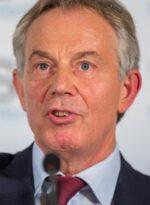
Tony Abbott went to London and at a dinner suggested that Europe stop the refugees coming in. But more of that later. Tony Blair held a press conference before the release of the Chilcot Report so he wouldn’t appear to be such a bad guy over the disintegration of the Middle East. He is a war criminal waiting to happen and George W Bush and maybe John Howard won’t be far behind. Even The Donald, one of the most pompous and awe-deflating Republican presidential candidates the world has ever seen, gets it. He said recently that Saddam Hussein and Muammar Gaddafi ought to be still alive and we wouldn’t be in such a mess. The Donald said what we are all thinking and not expressing enough. The USA and its allies have made a pretty big mess and don’t know how to get out of it. Vladimir Putin is becoming a folk hero in Syria as he goes about his business of getting rid of Isis in a steady, let’s bomb them now kind of a way. And Isis…well they wouldn’t be about if the west had left the Middle East alone all those years ago. It’s a big mess and it’s going to be awfully hard to fix it. War creates pain and right now thousands and thousands of refugees are trying to find some peace in faraway fields in Europe. Back to Tony Blair…in the UK officials want him to stand trial for his role in all this. Anger abounds and the Chilcot Report may well be the mechanism to make this happen. Tony Abbott is telling Europe to do what Australia did…turn the people back…protect your borders and let Assad and all his mates look after their own people. –The Elephant in the Conversation
Caution urged to resolve food crisis
The world has faced food crises twice since the latter half of the 20th century. The first one took place in 1973. The world end of term grain stock ratio, which had been on the decline for some years because of the worldwide grain failure, sank to a record-low of 15.4% in 1972. In the same year, the Soviet Union became a net-importer of grain due to the increase of livestock products consumed by the Soviet people. The 1973 crisis was caused by factors such as the bulk purchase of grain by the Soviet Union under the circumstances of poor harvest, and the U.S. placed an embargo on soybeans, albeit for a short period of time. The impact was so enormous that they named it the Reappearance of the Ghost of Malthus, and grain was referred to as the third strategic material behind nuclear weapons and oil. After that, however, countries including the European Community (EC) steered toward the enhancement of agricultural production, which considerably alleviated the condition of grain supply and demand. While protecting national borders by levying import surtaxes under the Common Agricultural Policy, the EC protected intraregional agriculture through generous support for farm product prices. As a result, they were plagued by excess produce in the 1980s. The EC implemented the raw milk quota system in 1984, and the U.S. also undertook the set-aside. The world grain market substantially shifted to the tone of excesses. The EC, which had failed to eliminate such excess, exported excess agricultural products to developing countries with export subsidies, and the U.S. used the said subsidies in defiance, causing a dumping battle with financial burdens. The agricultural negotiations in the Uruguay Round of GATT started in 1986 under the theme of removing the market distortion through agricultural protection by such developed countries, […]
What Volkswagen, Tesco and BP have in common
Over the past few years global corporations have been hit by scandals, and it mostly boils down to culture – or the lack thereof. Recently German automobile manufacturer Volkswagen hit the headlines for all the wrong reasons. Not two weeks after having been declared “Industry Leader” in the 2015 DJSI Annual review, they were found to have installed software in vehicles allowing them to cheat on US emissions testing. Not only is this unethical, it is of course hugely illegal. There’s been an abundance of writing published since on the issue, but I’d like to ask a slightly different question: how does a leading global brand allow such behaviour to take place? By looking at this instance in the context of other high-profile scandals – specifically those involving BP and Tesco– perhaps we can find some answers. In all cases of wrongdoing, the actions of certain individuals will be the cause. However, it’d be naive to think that one or a collection of individuals were and are the sole cause at the root of the issue. It all comes back to culture, or more specifically, the lack of an ethical/responsible culture. There’s much academic writing that suggests individuals’ actions are the result of an organisation’s culture, not it’s values or even the individual’s beliefs. For multinational companies as large as Volkswagen, BP and Tesco are, it’s fair to assume that nearly all of their staff have and will act in a responsible and ethical manner. However, company or department cultures caused certain individuals to act in unethical ways. Below are four potential catalysts for an unethical culture: Inappropriate goals – Chasing sales targets, acquiring market share, obtaining new contracts are just a few goals that could create the pressure to act unethically Inappropriate reward system – Similar to goals, companies that […]