
Nuclear powered submarines to keep an eye on the “wolf warrior”
The submarines will be patrolling the waters, keeping an eye out for the ‘wolf warrior”.
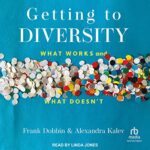
“Too many companies don’t know how to walk the walk of diversity, equity, and inclusion. Getting to Diversity shows them how.”—Lori George Billingsley, former Global Chief DEI Officer, Coca-Cola Company In an authoritative, data-driven account, two of the world’s leading management experts challenge dominant approaches to increasing workplace diversity and provide a comprehensive account of what really works. Every year America becomes more diverse, but change in the makeup of the management ranks has stalled. The problem has become an urgent matter of national debate. How do we fix it? Bestselling books preach moral reformation. Employers, however well intentioned, follow guesswork and whatever their peers happen to be doing. Arguing that it’s time to focus on changing systems rather than individuals, two of the world’s leading experts on workplace diversity show us a better way in the first comprehensive, data-driven analysis of what succeeds and what fails. Frank Dobbin and Alexandra Kalev draw on more than thirty years of data from eight hundred companies as well as in-depth interviews with managers. The research shows just how little companies gain from standard practice: sending managers to diversity training to reveal their biases, then following up with hiring and promotion rules, and sanctions, to shape their behavior. Almost nothing changes. It’s time, Dobbin and Kalev argue, to focus on changing the management systems that make it hard for women and people of color to succeed. They show us how the best firms are pioneering new recruitment, mentoring, and skill training systems, and implementing strategies for mixing segregated work groups to increase diversity. They explain what a difference ambitious work–life programs make. And they argue that as firms adopt new systems, the key to making them work is to make them accessible to all—not just the favored few. Powerful, authoritative, and driven by a commitment […]
There is an entrenched relationship between the consulting industry and the way business and government are managed today which must change. Mariana Mazzucato and Rosie Collington show that our economies’ reliance on companies such as McKinsey, Boston Consulting Group, Bain & Company, PwC, Deloitte, KPMG and EY stunts innovation, obfuscates corporate and political accountability and impedes our collective mission of halting climate breakdown. Mariana Francesca Mazzucato is an economist with dual Italian–American citizenship. She is a professor in the Economics of Innovation and Public Value at University College London and founding director of the UCL Institute for Innovation and Public Purpose. Rosie Collington is a PhD candidate at the UCL Institute for Innovation and Public Purpose, where she researches the political economy of outsourcing. The ‘Big Con’ describes the confidence trick the consulting industry performs in contracts with hollowed-out and risk-averse governments and shareholder value-maximising firms. It grew from the 1980s and 1990s in the wake of reforms by both the neoliberal right and Third Way progressives, and it thrives on the ills of modern capitalism, from financialization and privatisation to the climate crisis. It is possible because of the unique power that big consultancies wield through extensive contracts and networks – as advisors, legitimators and outsourcers – and the illusion that they are objective sources of expertise and capacity. To make matters worse, our best and brightest graduates are often redirected away from public service into consulting. In all these ways, the Big Con weakens our businesses, infantilises our governments and warps our economies. Mazzucato and Collington expertly debunk the myth that consultancies always add value to the economy. With a wealth of original research, they argue brilliantly for investment and collective intelligence within all organisations and communities, and for a new system in which public and private sectors […]
Denis Muller, Senior Research Fellow, Centre for Advancing Journalism, The University of Melbourne News Corporation is cutting its staff by 5% globally, including in Australia, after its news media division recorded a second-quarter earnings decline of 47%. The decision inevitably reopens questions about the future of the company’s newspapers, particularly once Rupert Murdoch is gone. The company’s chief executive officer, Robert Thomson, said a surge in interest rates and inflation caused the earnings decline, and that these effects were “more ephemeral than eternal”. However, structural complications in the corporation suggest these “ephemeral” factors are only part of the problem. “Eternal” factors – such an interesting word where Murdoch is concerned – include the performance of the tabloid newspapers that have played a pivotal role in the development of the organisation. It casts a large shadow over the organisation’s future direction and structure. A glimpse of this has emerged since the public became aware in October 2022 of a proposal to reunite News Corp, which is the newspaper division of the empire, with Fox Corp, which focuses on television and streaming services. The two were split in 2013 to quarantine Fox from the taint of scandal arising from the phone-hacking in the UK, perpetrated by News International, a subsidiary of News Corp. The reunification proposal ran into strong resistance from the market for two reasons. First, there were misgivings among shareholders in News Corp about the business merits of Fox Corp, and vice-versa. Second, there were lingering reputational concerns hanging over from the hacking scandal. In January 2023 it was announced that reunification would not proceed, at least for now. As if to reinforce the relative strengths and weaknesses of the News and Fox divisions, in the same quarter that the newspapers showed such a dramatic earnings decline, Foxtel Group’s subscriber base grew 10%, and the subscriber […]
International Woman’s Day/International Day of Women and Girls in Science, 11 February 2023 and to celebrate www.asiamanufacturingnewstoday.com and www.themirrorinspires.com interviewed Lim Xin Lan, senior Power Engineer CHINT, Asia. Why did you choose to become a power engineer? My love for numbers led me into Engineering. When I was pursuing my Honours in Electrical Engineering at the Nanyang Technological University in Singapore, I developed an interest in power engineering. In my twenties, I foresaw how I could empower the world as a power engineer. I wanted to make an impact to society at large by ensuring the safe transmission of reliable electricity – a fundamental human need. It has been about a decade since I graduated from school, and I have never once looked back at my decision. Till today, I’m still motivated by my role as I always find meaning in what I do. There can’t be many female power engineers? My undergraduate cohort consisted of about 100 students, and they were mostly male. While the number of female power engineers in the industry today is still outnumbered by men, gender should not be a qualifying factor for this profession. If anything, the small number of female engineers in the industry as a whole represents an opportunity for more women to break into this field. Power engineers, whether male or female, should be driven by a strong sense of intuition, and importantly, a passion to solve real world problems such as the electrification of underserved areas in the world, and to ensure the safety of the end users. What is it exactly that you do? In a nutshell, critical thinking is what I do on a daily basis. I recommend the right solutions to businesses and governments worldwide to ensure the safe transmission of reliable electricity, and at the same […]
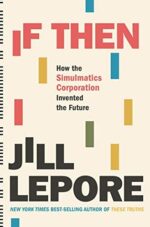
– Jill Lepore A brilliant, revelatory account of the Cold War origins of the data-mad, algorithmic twenty-first century, from the author of the acclaimed international bestseller, These Truths. The Simulmatics Corporation, founded in 1959, mined data, targeted voters, accelerated news, manipulated consumers, destabilised politics, and disordered knowledge–decades before Facebook, Google, Amazon, and Cambridge Analytica. Silicon Valley likes to imagine it has no past but the scientists of Simulmatics are the long-dead grandfathers of Mark Zuckerberg and Elon Musk. Borrowing from psychological warfare, they used computers to predict and direct human behaviour, deploying their “People Machine” from New York, Cambridge, and Saigon for clients that included John Kennedy’s presidential campaign, the New York Times, Young & Rubicam, and, during the Vietnam War, the Department of Defense. Jill Lepore, distinguished Harvard historian and New Yorker staff writer, unearthed from the archives the almost unbelievable story of this long-vanished corporation, and of the women hidden behind it. In the 1950s and 1960s, Lepore argues, Simulmatics invented the future by building the machine in which the world now finds itself trapped and tormented, algorithm by algorithm. “A person can’t help but feel inspired by the riveting intelligence and joyful curiosity of Jill Lepore. Knowing that there is a mind like hers in the world is a hope-inducing thing.” –George Saunders “Everything Lepore writes is distinguished by intelligence, eloquence, and fresh insight. If Then is that, and even more: It’s absolutely fascinating, excavating a piece of little-known American corporate history that reveals a huge amount about the way we live today and the companies that define the modern era.” –Susan Orlean “Data science, Jill Lepore reminds us in this brilliant book, has a past, and she tells it through the engrossing story of Simulmatics, the tiny, long-forgotten company that helped invent our data-obsessed world, in which prediction is seemingly […]
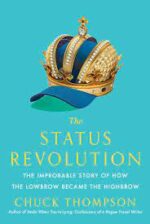
-Chuck Thompson How did rescue dogs become status symbols? Why are luxury brands losing their cachet? What’s made F. Scott Fitzgerald’s most famous observations obsolete? The answers are part of a new revolution that’s radically reorganising the way we view ourselves and others. Status was once easy to identify—fast cars, fancy shoes, sprawling estates, elite brands. But in place of Louboutins and Lamborghinis, the relevance of the rich, famous, and gauche is waning and a riveting revolution is underfoot. Chuck Thompson sets out to determine what “status” means today and learns that what was once considered the low life has become the high life. In The Status Revolution, Thompson tours the new world of status from a small community in British Columbia where an indigenous artist uses wood carving to restore communal status; to a Washington, DC, meeting of the “Patriotic Millionaires,” a club of high-earners who are begging the government to tax them; to a luxury auto factory in the south of Italy where making beautiful cars is as much about bringing dignity to a low-earning region than it is about flash and indulgence; to a London lab where the neural secrets of status are being unlocked. Full of revelations and with his signature wit and irreverence, Thompson explains why everything we know about status is changing, upends centuries of conventional wisdom, and shows how the new status revolution reflects our place in contemporary society.
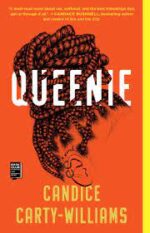
-Melanie Saward, Associate Lecturer, Creative Writing, Queensland University of Technology Early in the pandemic, I looked after my niece because she had conjunctivitis and couldn’t go to daycare. Despite my best efforts, I caught it. My infection morphed into tonsillitis and I became very sick. I couldn’t read or watch TV properly – which everyone knows are the only pleasures of being sick. So I downloaded the audiobook of Queenie by Candice Carty-Williams and listened in bed with my eyes closed. Before long, I found myself pausing the book to leave myself croaky, semi-lucid voice notes as I fell in love with Queenie Jenkins. (I should have known, in the middle of my PhD on rom-com, I’ll never read commercial fiction solely for pleasure again.) Bridget Jones meets Americanah Popularly billed as “Bridget Jones meets Americanah”, Queenie is the story of a 25-year-old Jamaican British woman living in London, working at a national newspaper, and navigating life after a messy breakup with long-term boyfriend Tom. Queenie opens in a gynaecologist’s office with a nurse performing an internal exam. It’s got a real chick-lit feel to it – for two paragraphs. But when the nurse brings a doctor into the room for a second opinion, you can feel the shift that indicates this isn’t just another fluffy, formulaic rom-com. Queenie is written by Candice Carty-Williams, a British writer of Jamaican and Indian heritage. Carty-Williams comes from a publishing background. She started out with internships that led her to HarperCollins UK, where she worked as a marketing assistant at the 4th Estate imprint. She was then promoted to marketing executive and started a short-story program for Black, Asian and minority ethnic writers to help them get published and/or represented by agents. She went on to work at Penguin, where she was a mentor for the Write Now program, a […]
(By Cariola Carabel) We live in a world of pesticide-drenched food, polluted air, water containing all sorts of unnatural chemicals and drug residues, poisonous homes… Pesticides are biocides and will quickly kill you in large doses, and slowly and accumulatively over time. We also live under dubious medical regimes – even untested and coercive gene therapy, some say, that will irredeemably alter our health and perhaps even our genes. But surely no one is actually trying to poison us, are they? Is this a necessary trade-off for having enough food? There is no historical reason to think that small farms cannot produce enough food for the population. In capitalism, scarcity is artificially maintained for economic reasons. In an important 4-decade-long study done on US farming, organic small-scale farming was in fact found to be more profitable that industrial farming, and had similar yields. During times of drought, yields were even 40% higher. Other long-term studies have found similar results. Additional findings are that organic soil has bacteria and fungi that keep plants healthy and able to defend themselves from pests, and that soil becomes progressively healthier, unlike the soil depletion that results from industrial farming. India’s massive famines from the 18th Century onwards occurred at a time when England was importing foods from India, and at times even stockpiling in order to increase prices. The English government at the same time prohibited other regions in India from helping those where hunger was rife, a custom that dated back more than 2000 years (the Kautilya treatise), sustaining in Parliament that aid would in the long term make India weaker and less able to fend for itself. In the mid-19th Century, it was common economic wisdom that government intervention in famines was unnecessary and even harmful. The market would restore a proper […]
#poisoning #fluoride #drinking water Cariola Carabel https://ocultoaplenavista.blogspot.com/ In Vermont, USA, a few days ago, a town employee was found to have reduced fluoride levels in the municipal water for the last 5 years. A mother was reported to be outraged because her children’s dentist had recommended against supplemental fluoride because fluoride was already added to the town’s water. What this shows is that adding fluoride to water is a medical decision that affects everyone, whether someone has had already significant amounts of fluoride or not; whereas taking supplemental fluoride or using fluoridated toothpaste is a personal choice. It has been argued that poorer people cannot afford fluoridated toothpaste and are thus helped by water fluoridation. In fact, as I shall show, poor people are the ones most harmed by the measure. In any case, the solution would seem to be to guarantee that poor people have enough money to buy basic necessities, or to prescribe poor people free toothpaste and fluoride tablets where necessary, and educate everyone on the importance of oral health and good diet for avoiding tooth decay, obesity and diabetes. Does any of this matter? We assume that fluoride added to water must be innocuous and, of course, good for our teeth. But is it? In fact fluoride is a neurotoxin that in 21 out of 23 studies was found to reduce children’s intelligence and should be categorised like lead, mercury, arsenic… It is a component of many insecticides and rodenticides (in these cases generally as sodium fluoroacetate). Excess fluoride causes stains on teeth, hypothyroidism, and possible bone disease (because excess fluoride collects in the body’s calcium, i.e. bones and teeth), including weakened bones. It also collects in the pineal gland (more of that later) and may cause mental impairment, tiredness and gastrointestinal problems. Those with impaired kidneys are unable to process fluoride, resulting […]